AIM

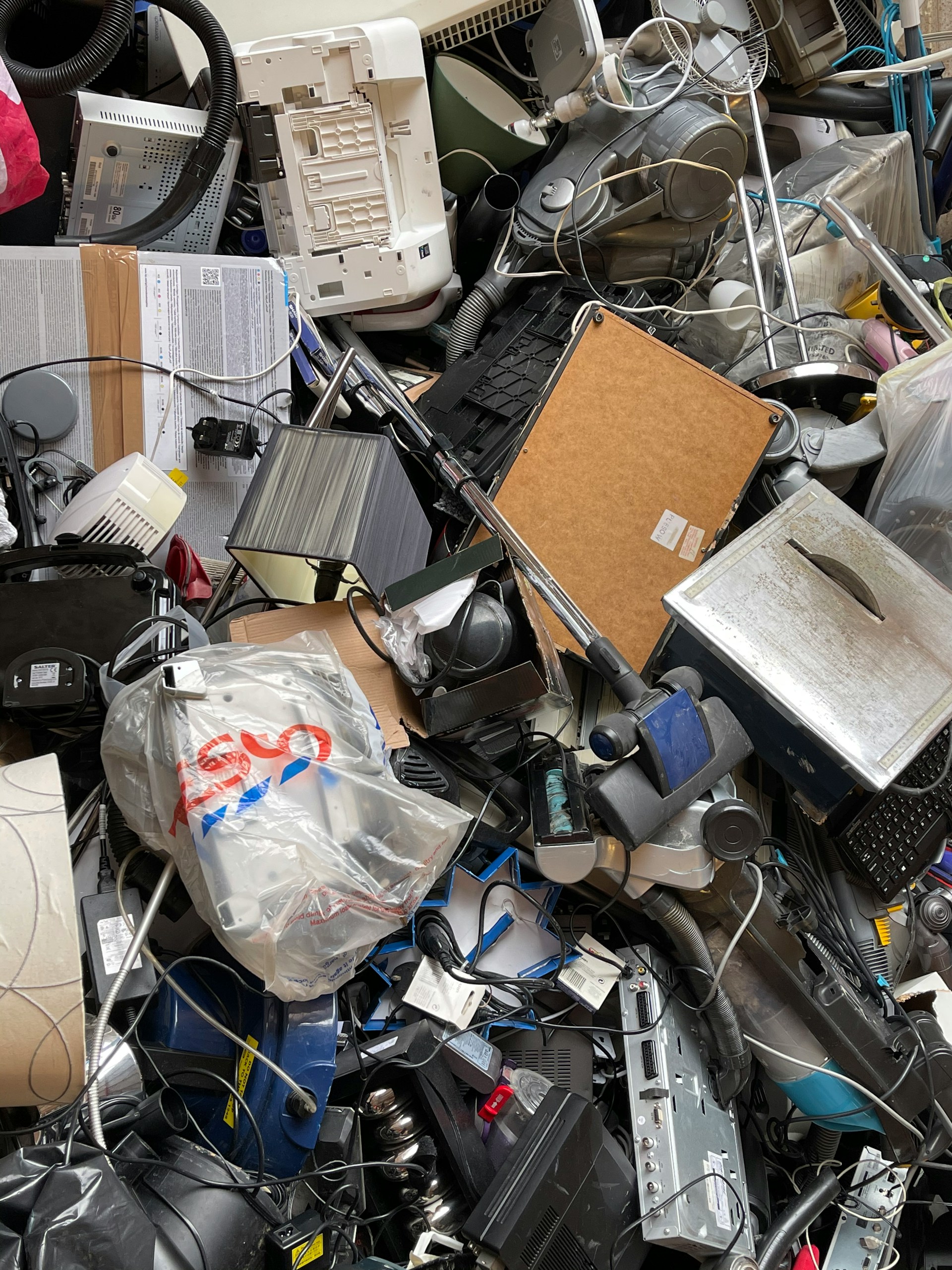
To highlight concerning consumption problems by creating engaging interactions and storytelling experiences to provoke stimuli for thought about current consumption behavior of goods, especially EEE products to consumers.

Virtual Reality Playthrough Demo on a Meta Quest 3

Project Outline

  • Curating human experiences and participation to design and instill narratives around a framework around which content can mapped.
  • To experiment with digital mediums and understand its affordance in the context of the narrative.
  • To engage in reflective conversations that leave a profound impression for the audience.

Project Timeline: 4 Months

Methodologies Implemented

After a careful consideration and receiving advice from faculty and mentors, these methods were chosen and carried out through every step of the Thesis Project.

Research Design and Methods
Literature Review, Field Research, Market/Competitive Analysis
Primary Research
Survey forms, Interviews, Empathy mapping, Persona Creation
Thematic Ideation
Archetype based Ideation, Design Fiction, Storyboarding, Game design
Speculative Fiction
Four-Square matrix Scenario Mapping, Building Narratives, storytelling
User Testing
Novice & Experienced User Testing, Shadowing
Prototype creation
Blender - Unity pipeline, Experimenting with Micro-interactions, Game/Level Design

Value Proposition

To provide audiences and players with a unique experience that cannot be felt in the real world by leveraging Virtual Reality to engage players in narratives about provocative experiences such as the invisible price of consumption and the intangible impacts of E-waste.

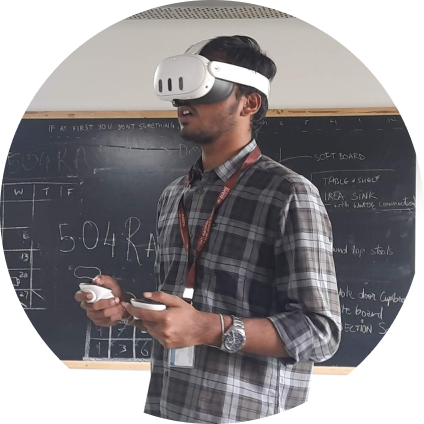
User wearing a headset and trying out a VR Experience in a classroom

Primary Research

The method deployed in this study had to find what are the current levels of awareness of the impact of E-waste and landfills? What is the perception of the Virtual Reality and the comfort levels associated to it? and what are they expecting and looking from it?

The insights found from surveys, interviews and probe based testing helped create personas and the goals of the experience to create based on user painpoints and desires each group showed to prevent the accumulation of E-waste and engage with new media experiences. While these personas would fit our primary age group and stakeholder, we also need to focus on keeping the platform accessible to general audiences in our chosen locations such that it would be an effective stimuli for the same purposes as our target audiences.

What?

Creating VR Experiences that create landscapes that can't be experienced in real life. It aims to capture real life scenario that can spotlighted for the Players to uncover

Why?

Lack of waste management and segregation damaged the environment, hidden under the veil of consumerism and urbanization. This experience aims uncover the consequence that are not immediately visible

Where? Who?

This aims to be introduced in educational and cultural institutions to younger audiences who are at the forefront of innovations and are often targeted by consumerism

How?

Creating an expansive world that builds on real life narratives accompanied by open world explorations and gamified interactions that can empower the user to come back to enjoy and learn.

Personas: needs & desires

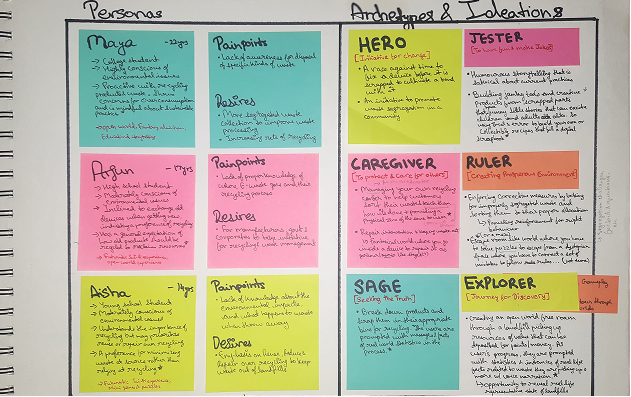
Personas are valuable to understanding the direction of the experience and how it should crafted.

After conducting interviews, surveys and one-on-one testing with various kinds of existing VR games, these personas were created

Maya, 22yrs

She lacks awareness about specific waste disposal methods and worries about overconsumption and limited repair options. She proposes better waste segregation and collection systems to enhance recycling rates.

Arjun, 17yrs

He lacks awareness of e-waste disposal processes. His recycling habits depend on convenience, peer influence, and motivation. He advocates for initiatives from manufacturers, government, and corporations to improve recycling efforts.

Aisha, 14yrs

She lacks awareness about environmental health and the fate of waste when discarded. She may have misconceptions or uncertainty about disposal methods. She prioritizes reusing, reducing, and repairing to minimize landfill waste.

Ideation & World Building

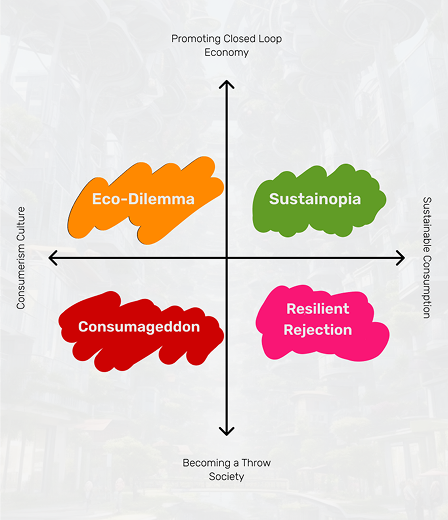
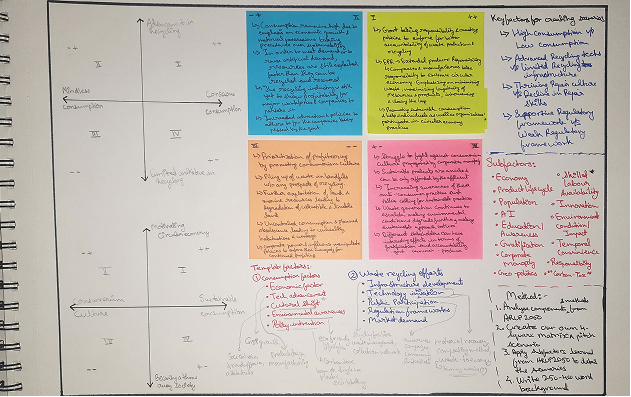
This process involved understanding and designing speculative fictions around a 4 square matrix. Using the archetype based ideation method, several ideas for gamification and interactive touchpoints were created. This process helped characterize the process, staying inline with the objectives of the experiences.

Read. Read. Read

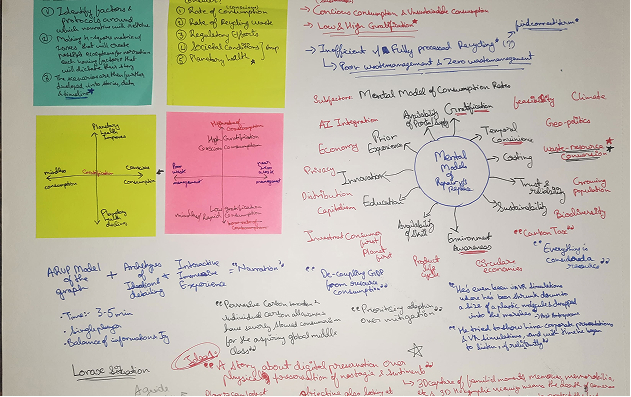
Literature on various worldwide scenarios were studied to combine various field of knowledge to help build out the matrix. The research includes waste management practices, mindset in different countries and the early history of consumerism.

Identify & Plot

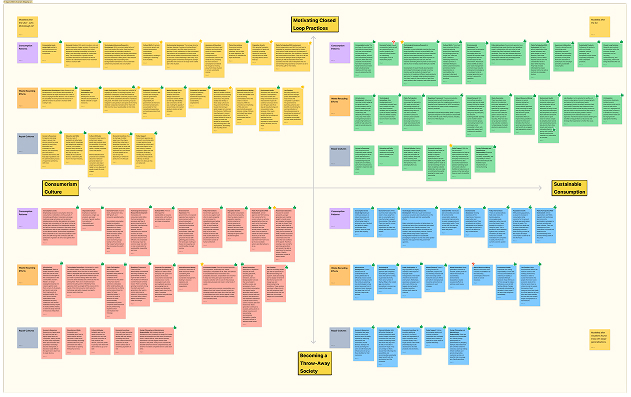
Key factors were identified for the graph and their subfactor for each scenario, plotting them onto the matrix with our own predictions of the future and mix of story telling.

Extrapolate

Four scenario were created and 'Resilient Rejection' was taken forward, extrapolating a storyline and script that will fit into shaping the world in which ideas will take shape as full fledged experiences.

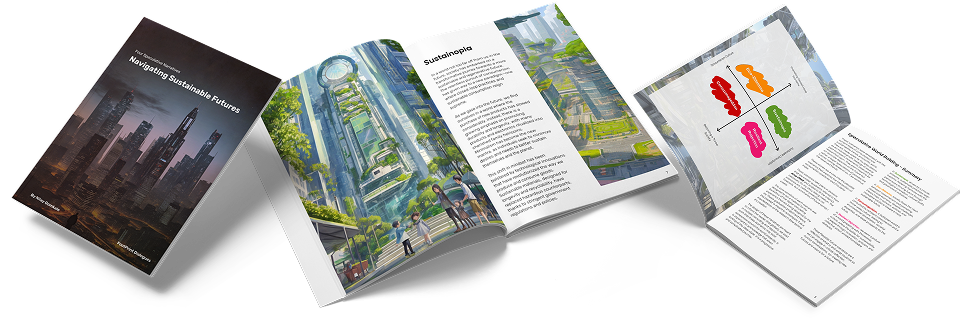
Designing a Speculative Fiction Booklet

A booklet was specially created with fictitious narratives of the speculative scenarios written with the help of Generative AI as a part of world building as an accumulation of analyzing current scenarios and future trends along the axis of the 4 square matrix.

On the ends of X-axis lie 'Sustainable Consumption' and 'Consumerism', while on the Y-axis lie 'Promoting Closed Loop economies' and 'Becoming a Throwaway Society'. This helps me generate four scenarios that have their own twist that is based on situations or trends that can become reality as we trend down those paths.

The data was synthesized and storied with the help of ChatGPT, following which the desired illustration were prompted from Leonardo AI. This exploration activity was used to test and understand how the growth of AI in creative application and were put together in this booklet. The full booklet for reading can be found in the extensive document version linked at the end.

Crafting the Experience

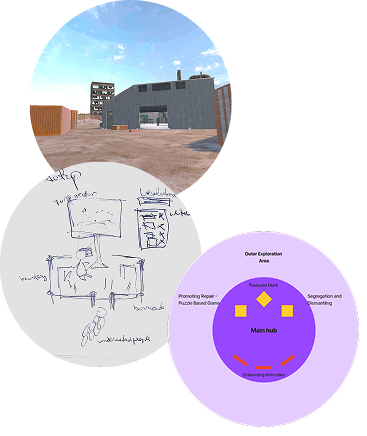
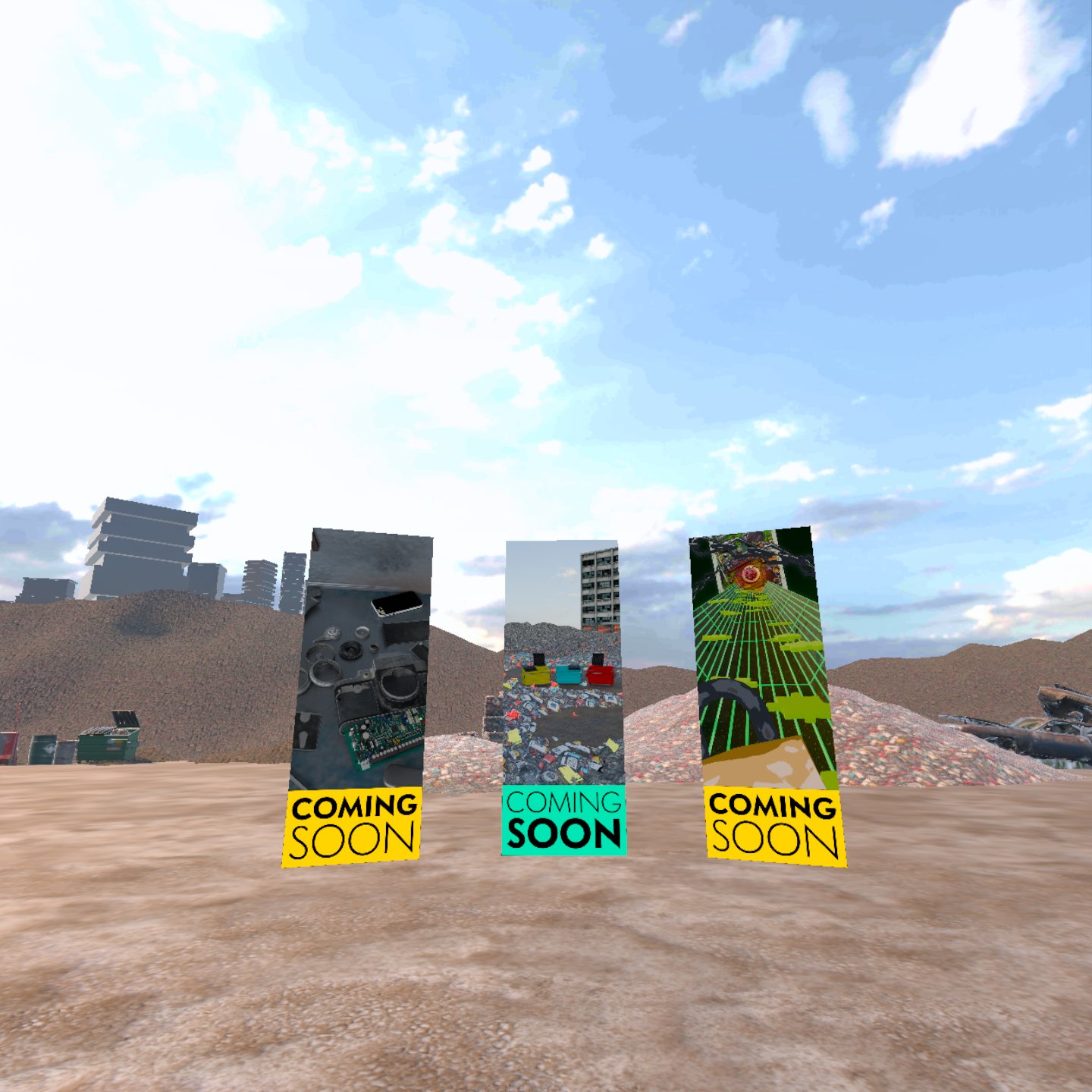
In this stage, The environment and interactions that will a part of the experience are created. Players will load into a Game Hub with options to play three games built to develop knowledge and deeper appreciation for technology in our everyday lives.

This process involved curating assets, optimizing them, fine tuning a locomotion system, creating journey flows and integrating all the systems to start creating the experience. This process was an opportunity to study the UX of VR as well as experiment with Unity and and other technologies to create the foundation

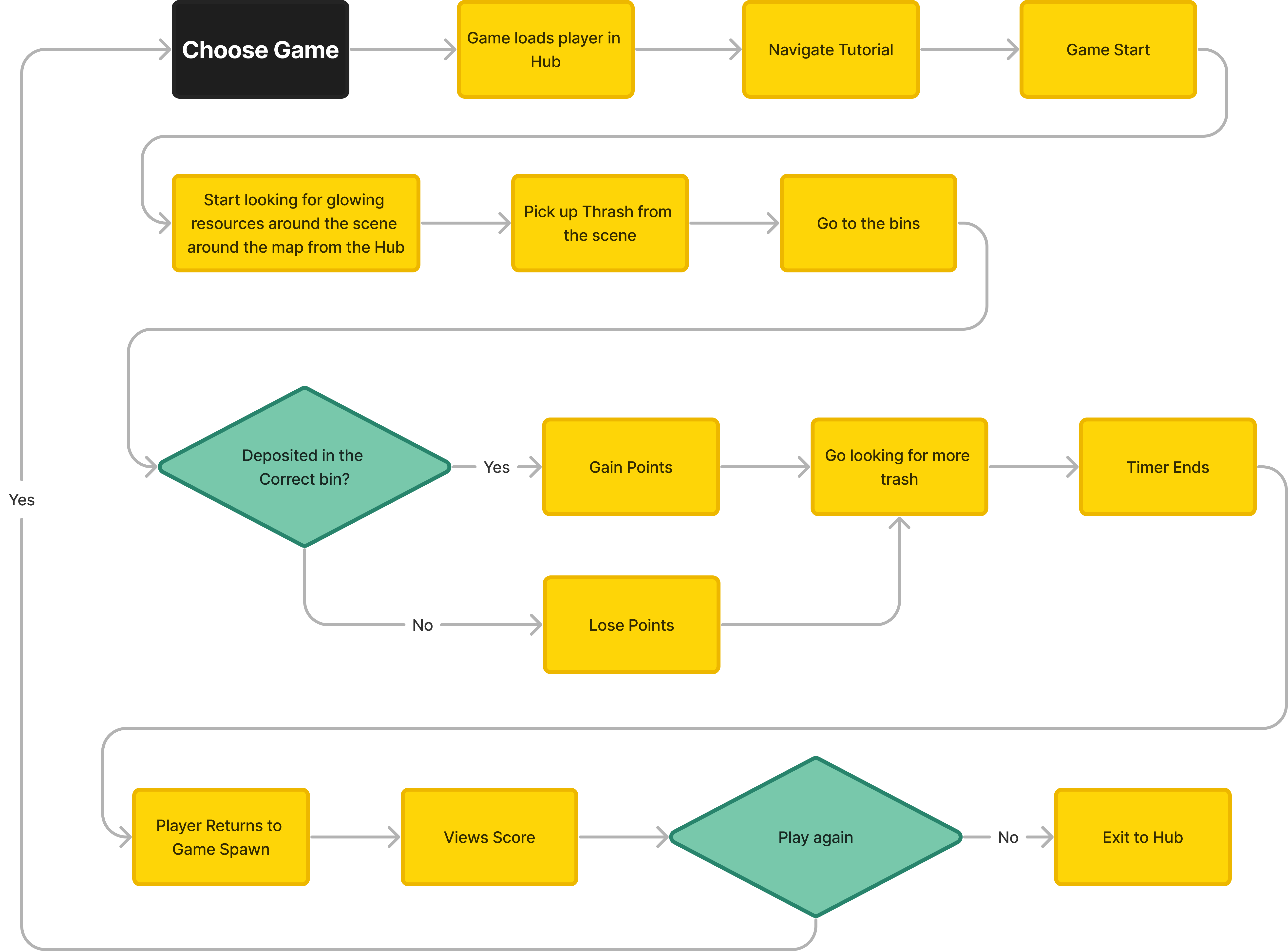
Gameplay Task Flow

The world space is designed in a way that players can roam freely and explore the virtual space, getting accustomed to navigation. The warehouse space acts as the hub where players can choose to play any of the three planned games.

They are rewarded for positively impactful actions and deterred when an improper action is carried out. These games and ideas are built to promote proper waste management and segregation as well as promoting repair cultures and preservation of sentimental electronic devices, these games are still conceptual as the current build for presentation will focus on building the open world exploration.

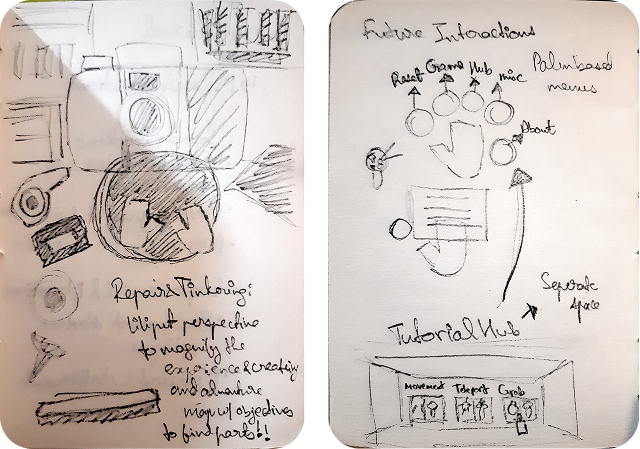
Future updates could include dedicated tutorials, menu systems and gameplay experiences as the research and learning process of the best User Experience continues through testing.


Project Development Progression

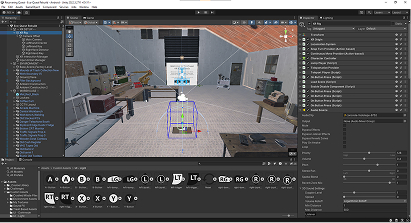
A look into the unity editor where the scene and basic menu is assembled using the XR interaction tool kit to build this open world map

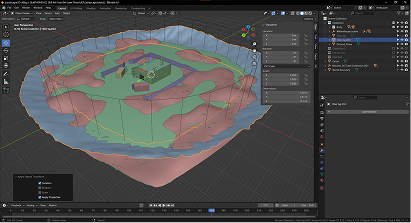
Blender is used to assemble the terrain and correctly optimize the assets with the proper shaders before importing to unity

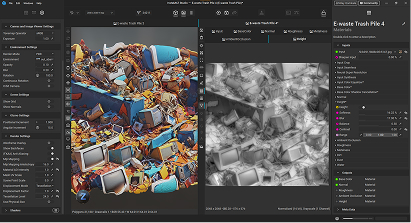
Experimenting with Instamat to generate procedural materials from images generated by Leonardo AI

Reflective Note

The thesis project was an opportunity to break into a new venture and develop a niche understanding of crafting user experiences in XR. It became a culmination of all the practices and learnings I accumulated through the 4 years of my undergrad. So, I challenged myself to elevate my creative direction and experimental temperament. It was an interesting journey to see my motivation to explore and experiment take on such a technical endeavor. It was a very enjoyable and intimidating process of delving into VR as it involved designing in a whole new dimension, whose affordances seemed endless and the development process seemed daunting. This project so far has transformed into a playground of experiences and narratives, ranging from possible new integrations and the progressive iterations of existing features that aim to create better user experiences. It is exciting to further my practice into researching how experiences grow on players and the world building aspect was very enjoyable.

Want to see more?

This project was a four months journey of extensive researching, creative coding, spatial visualization and so much more.
To learn more about the journey, click here to find more in-depth documentation for:

  • The qualitative and quantitative data from Surveys and Interviews
  • Detailed Persona Maps and Paintpoints
  • Archetype based Ideation Process
  • Deep dive into VR Ergonomics and extensive user testing journey
  • The Speculative Fiction process and Booklet pages
  • The gameplay mapping and sketches
  • Tools used and Bibliography
  • and much more...